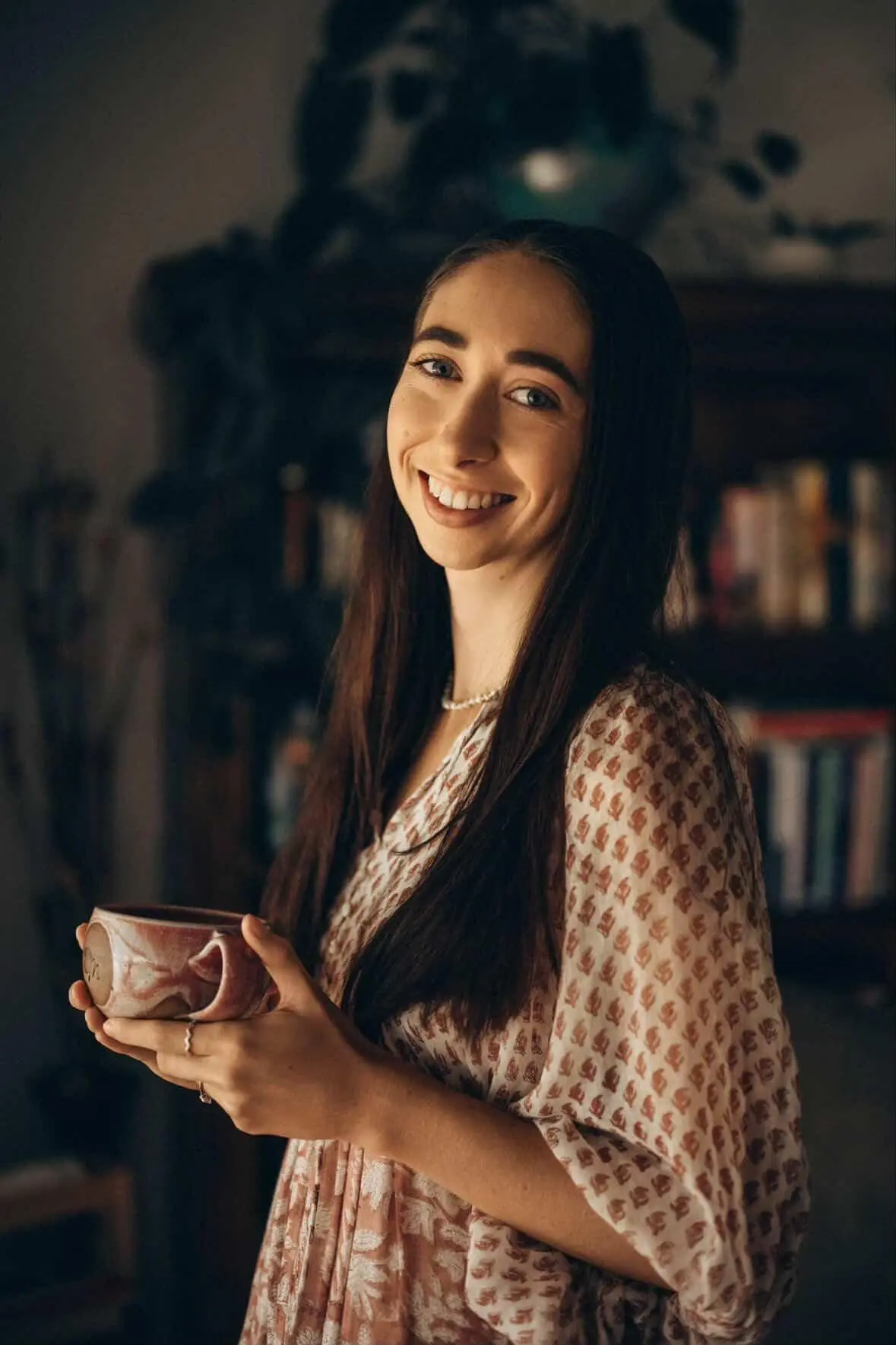
You have recently completed the Reconnected Birthing Practitioner mentorship with B from Core and Floor Restore, and are now offering birth processing and preparation sessions. Can you share what called you into this work at this point in your own journey?
Soon to finish 😊 I complete the mentorship in just a few weeks’ time. Over the past few months, I’ve had the immense honour of holding space for many women as part of this training, and I am so looking forward to continuing moving further into this work.
I was first called to this work through my own birth experiences, and through the support I received in both processing my first birth and preparing for the birth that followed. Experiencing firsthand how transformative that work could be shaped so much of the path I’m now walking.
Within my own circles (and increasingly in the wider birth space) I kept noticing how many women were carrying birth stories that had never truly been witnessed, fully felt, or given the space to be integrated. I saw women entering subsequent births carrying narratives from previous birth experiences – sometimes even from their own birth into the world – without ever having had the opportunity to gently explore what was still living there.
And yet these experiences can profoundly influence not only the way we move through birth, but the way we experience ourselves within motherhood too.
You describe this work as somatic, trauma-informed, and an invitation to reconnect with the body’s innate wisdom. Can you share what this actually looks like in a session with you?
For me, somatic and trauma-informed birth processing means we move beyond simply recounting what happened and begin noticing how the experience still lives within the body.
In a session, that often looks like connecting in to our body and noticing sensations – where they are sitting and what they might be telling us, as well as identifying emotions, protective responses or patterns that arise as we speak. Sometimes that looks like identifying where grief sits in the body. Sometimes it is supporting anger that was never allowed expression. Sometimes it is reconnecting to moments of power, instinct, softness, or choice that were overshadowed.
Ultimately, we work with the nervous system rather than against it and create enough safety for the body to begin communicating what it may not have had the capacity to process at the time.
Many women describe birth as something they have thought about but not fully felt through. What do you notice about the way unprocessed birth experiences live in the body over time?
Unprocessed birth experiences do not disappear simply because time has passed. They can continue living in the body in subtle and profound ways – and are often passed down through generations of women.
For some women, it shows up as hypervigilance, anxiety, difficulty trusting themselves, fear around future births, or feeling emotionally activated when discussing birth. For others, it can feel more like numbness, disconnection, grief, resentment, intrusive memories, or a sense that a part of them is still “back there.”
Many women have spent years trying to cognitively understand their birth, but the body can still hold unfinished survival responses underneath that understanding. The nervous system remembers what the mind has attempted to move past.
I also think many women have never been given permission to acknowledge that birth impacted them deeply. Particularly in a culture that often expects women to be grateful, resilient, and immediately focused on the baby, there can be very little room to explore what the experience meant for them.
What does energetic and somatic preparation for birth involve in your preparation sessions? You are clear that this is not a medical debrief or traditional birth education, can you describe the difference between those approaches and birth processing work?
A medical debrief often focuses on explaining clinical events and focuses heavily on the details around what happened, why decisions were made, what interventions occurred and why. Birth processing work is different because the focus is not primarily on the medical facts of the birth, but on the lived experience of the woman within it.
We are exploring questions like:
How did this feel in your body?
Where did you override yourself?
What felt safe or unsafe?
What meaning did you make from that experience?
What emotions or responses still feel unresolved?
In terms of birth preparation – I feel like traditional birth education often focuses on information, physiology, and preparation strategies. Understanding physiology, birth options, interventions, and the evidence base can be incredibly empowering. But the work I offer is an invitation to go a little deeper — beyond what we know intellectually, and into what may be living within the body and nervous system.
Birth often has a way of bringing our patterns, beliefs, coping mechanisms, fears and conditioning to the surface. The ways we relate to control, surrender, safety, trust, boundaries, support, vulnerability, advocacy, or even our own intuition can all emerge within the birth space. When women prepare in this deeper, more embodied way, I often find there is more capacity to stay connected to themselves within birth, rather than feeling consumed by what is happening around them.
In your posts you speak about holding space for emotions that can feel complex or confusing after birth. What are some of the emotional experiences you most often witness in women coming to this work?
Grief, rage, confusion, shame, numbness, tenderness, disappointment, fear, longing, relief, even guilt for feeling impacted “despite” a healthy outcome. One of the most common things I see is women questioning the validity of their own experience. They often minimise what happened to them or feel they are “too sensitive.” Many carry grief not only for what happened, but for what did not happen – the loss of trust, the loss of choice, the loss of safety, the loss of the birth they imagined.
I also see women reconnecting with immense power. Sometimes beneath the grief there is instinct, wisdom, strength, or knowing that never actually disappeared – it simply became buried beneath layers of medicalisation, fear, or self-doubt. This is always beautiful to witness.
How do you support a woman to feel safe enough to revisit her birth experience without becoming overwhelmed by it?
I will always meet women where they are at. Assessing a woman’s nervous system state is crucial in this work. A woman cannot process something while her nervous system feels overwhelmed or unsafe. How a session runs and where we go is very dependent on this, and I aim to remain deeply attuned to what the woman in front of me has capacity for at that moment.
I support regulation by moving slowly, staying connected to the present moment, and continually checking in. We might work with grounding, breath, sensation, movement, touch, imagery, or pauses. I pay close attention to signs that the nervous system is becoming flooded or disconnected, and we work within what feels manageable rather than pushing beyond it.
Matrescence is often described as an ongoing psychological, emotional, and identity transformation, how does birth experience sit within that wider unfolding?
I see birth and matrescence as deeply intertwined. Birth is not simply the day a baby is born – it is a sacred rite of passage and an initiation into an entirely new relationship with self. And this is true for all births, not just the first.
The way a woman experiences birth can shape how she enters motherhood, how she trusts herself, how safe she feels in her body, how she relates to care systems, and how she understands her own intuition and power.
At the same time, matrescence is ongoing. Sometimes a woman only begins processing her birth months or years later because motherhood itself creates enough distance, awareness, or capacity for her to finally turn toward it.
For me, birth processing sits within this wider unfolding of becoming. It acknowledges that women are not meant to simply bounce back from birth unchanged.
You mention that integration is done at a woman’s pace, with care, curiosity, and respect. Why is pacing so important in this kind of work?
Pacing is important because the nervous system processes safety gradually. Healing cannot be rushed – there is no quick fix.
When women have experienced overwhelm, coercion, dismissal, or loss of agency within birth, moving too quickly through processing can unintentionally recreate that same feeling of being pushed beyond capacity.
Going at a woman’s pace communicates something profoundly important to the body: you are allowed to slow down, you are allowed to choose, and your boundaries matter here.
Often, the healing is not only in what is processed, but in the experience of finally being met with patience, consent, curiosity, and care.
For mothers reading this who may feel like something about their birth is still in them, but they don’t have language or space for it yet — what would you want them to know?:
That they do not need to justify why their birth still feels present within them and I would invite them to get curious about what it is telling them.
If something still feels unresolved, activated, tender, heavy, confusing, or unfinished, that does not mean something is wrong. It may simply mean that part of them is still waiting to be heard, witnessed, felt, or supported.
And importantly: they do not have to force language for it. The body knows and the body can communicate if we dare to listen.
Finally, what do you feel is most important for women, birth workers, and communities to understand about birth — not only as an event, but as something that continues to shape a woman?
I believe birth has the capacity for profound transformation. And when communities begin understanding birth as something worthy of reverence, integration, and ongoing support, rather than simply an outcome to survive – we will create far more space for women to heal, reconnect, and truly be held in their transition into motherhood.


To receive our “Fostering Emotional Intelligence Guide”