There are women in every community whose impact is not loud, but deeply felt.
They are not always the ones standing at the front of the room or speaking the most. Instead, they move gently through the spaces of motherhood — noticing, tending, offering. Their presence is often woven into the background of gatherings, yet without them, something essential would be missing.
This month, we honour that kind of mother.
Women who show up not for recognition, but because care lives naturally within them. Women who embody the quiet continuation of the village.
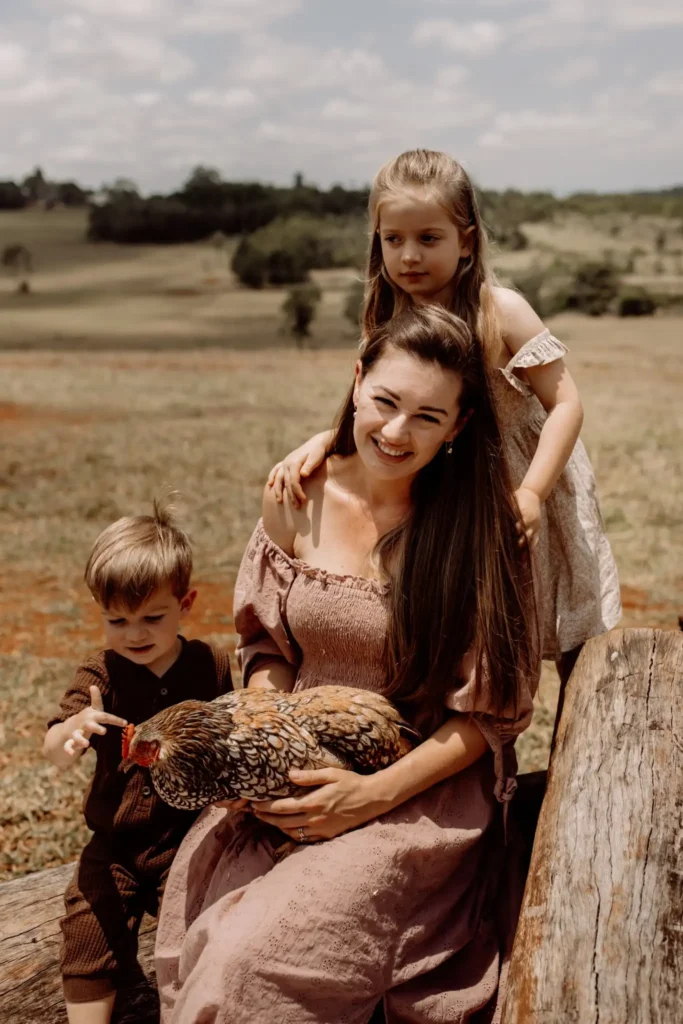
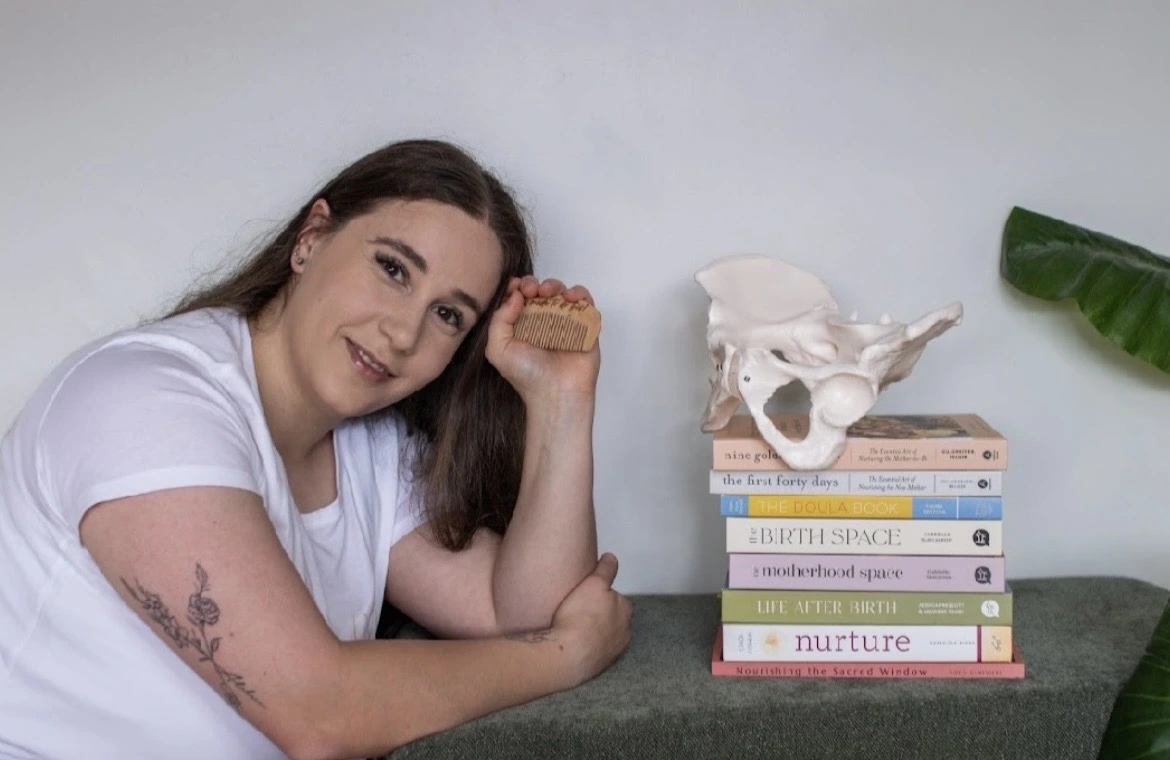
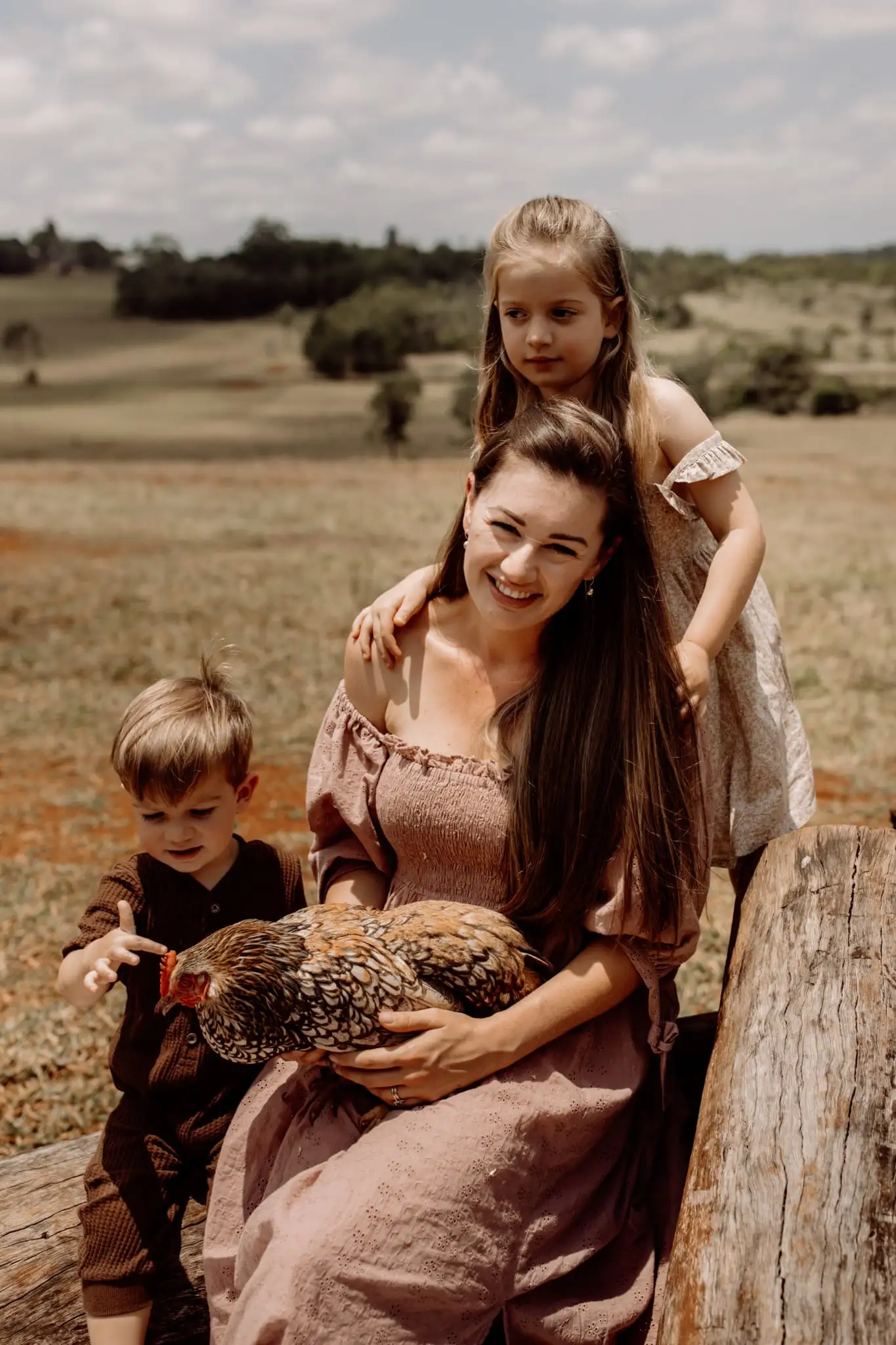
In our local Tablelands community, one such woman is Sarah Curcio — a mother of two, a homeschooler, and an active presence within spaces such as Atherton Midwives and Mothers Alliance (AMAMA) and Tablelands Home Education (T.H.E).
Her contribution is not defined by a single role, but by the way she moves through motherhood and community.
She shows up for women in their postpartum seasons — often quietly, without needing acknowledgement — offering practical care through meals, cleaning, and presence. She brings generous homemade goodies to women’s gatherings and family events, creating something to be shared and received, and a smile from a simple pleasure like a pancake dolloped in strawberry jam. She notices when someone is new and gently connects them with others, helping threads of relationship begin to form.
In this way, she is a weaver.
Not of grand gestures, but of everyday acts that hold women together.
Recently, in a circle of mothers, multiple women spoke her name — reflecting back the ways she had supported, nourished, and connected them. It was unexpected, and it moved her to tears. Perhaps because so often, this kind of giving happens quietly, without pause to be seen.
And yet, this is the fabric of motherhood.
Not only how we care for our own children, but how we extend that care outward — into friendships, into community, into the lives of other mothers navigating their own matrescence. In a culture where motherhood can feel isolating, women like Sarah remind us that the village is not something we find. It is something we create, through small, consistent acts of care.
There is no single way to “do” this.
No perfect formula.
Only the question: How can I show up, in the life I am already living?
Reflections from Sarah:
What draws you to support other mothers in your community, especially in the postpartum season?
I remember how tender that season can be. There’s a rawness to postpartum that isn’t always visible, and I feel an instinctual pull to honour and acknowledge that. It’s not something I overthink — it just feels like a very human response to care for a person who has just crossed such a big threshold.
How do you see the role of everyday acts — like cooking, cleaning, or simply being present — in supporting a mother’s wellbeing?
Those everyday acts can carry so much weight. When a mother doesn’t have to think about a meal or a messy space, it creates a bit of breathing room for her to land more fully in herself and her baby.
Even just having someone quietly present can soften the edges of what might otherwise feel overwhelming.
These kinds of acts are often overlooked because they’re so ordinary, but they’re also foundational. This invisible work — the tending, the noticing, the holding of daily life — has always been the quiet structure beneath everything else.
It’s work that has traditionally been carried by women, and it shapes not just individual families, but the wellbeing of whole communities.
There’s something incredibly powerful in recognising that what might seem small is actually part of something much larger — a way of sustaining life, of creating steadiness and care in the world.
When we support a mother in these ways, we’re not just helping her get through the day, we’re strengthening the wider fabric that holds us all.
As a mother yourself, what have you learned about the importance of connection between women?
It changes everything. Motherhood can feel isolating when we try to hold it all on our own, but being in relationship with other women brings perspective, reassurance, and a sense of being held.
It reminds us that we’re not meant to do this alone. I really feel that women in connection is a kind of secret key. There’s something deeply natural about women being together.
I sometimes think about “mum maths.” A hard day can feel heavy when you’re alone with your children, but somehow it can turn around completely when you add more — more children, more mothers, more presence. It sounds counterintuitive, but it shifts the atmosphere entirely. Two children on a hard day can feel like a lot, but when there are eight children in the home and two or three other mothers alongside me, it often feels lighter, more fluid. There are more hands, more ideas, more energy to share what’s needed in the moment. In those spaces, the pressure softens. Children find each other, mothers find each other, and something begins to flow that feels much closer to how this was always meant to be — held collectively.
You are involved in community initiatives like AMAMA and T.H.E — what do these offer mothers that feels important?
A place to belong. There’s something really powerful about being in spaces where motherhood is understood and supported, where you can show up as you are. They create opportunities for connection, shared learning, and the kind of conversations that don’t always happen elsewhere.
AMAMA has now come to a close, but it will always hold a really special place in my heart. It was a space where I learnt so much — not just about maternity care and motherhood, but about supporting women more deeply, and finding my voice as an advocate. It shaped the way I see community and the importance of protecting and nurturing these kinds of spaces for mothers.
T.H.E offers a different sense of connection — a place where families come together, share life, and support one another in the day-to-day rhythm of raising and home educating their children.
These spaces remind me how important it is for mothers to have somewhere to gather, to be seen, and to feel part of something bigger than themselves.
Many women feel unsure how to “be the village.” What would you say to someone who wants to support other mothers but doesn’t know where to begin?
Start small and close to what feels natural. It doesn’t have to be anything big — a meal, a message, an offer to sit with someone. I think it’s less about doing it “right” and more about being willing to notice and respond. The village is built through small, consistent gestures. At the same time, I think many of us have been shaped by a culture that tells us asking for help is a kind of weakness. Because of this I feel there’s something to be said for action.
Instead of offering and waiting, we can gently step in. Deliver the meal. Make the tea. Find the laundry — we all know it’s there — and start folding it.
Of course, this comes with sensitivity and respect, but often what a mother needs most is to be met in a real, practical way without having to ask or organise it herself.
Those quiet, tangible acts can speak louder than words and make it easier for her to receive the support.
What have you noticed mothers truly need, beyond the surface level support?
COMMUNITY. To feel seen, heard and not alone. Practical support is important, but beneath that is a deeper need to be acknowledged in what they’re walking through — without judgment or expectation. Just to be met where they are, with a sense of shared experience or understanding.
How do you tend to your own energy and capacity while also giving to others?It’s something I’m still learning, but one thing that really supports me is the sense that my cup can remain full. I don’t see myself as pouring from a place of scarce resources, but instead allowing what is full in me to overflow outward. When I’m tending to my own rhythm and staying connected to what nourishes me, there’s often more to give — not in a forced way, but in a way that feels natural and steady. I’ve come to see that caring for myself isn’t separate from caring for others, but actually part of the same cycle.
What does motherhood, in this season of your life, feel like for you?
The term “beautiful chaos” comes to mind. It feels full and ever-changing. There’s a rhythm to it, but also a lot of learning as I go — and I know that will never really change. Some days feel expansive and connected, others more challenging, but overall it feels like a season of deep growth, both in myself and in how I show up for my children and community.
Being past the sweet season of pregnancy, breastfeeding, and baby-wearing, I now find myself in this new chapter of watching my children really flourish in their own identities. It feels like such a privilege to walk alongside them as their mother in this stage — to witness who they are becoming. And to have the honour of doing all of this alongside a community of women and mothers whom I love, respect and can turn to… I feel truly blessed.
Motherhood is shaped not only in the big moments, but in the quiet, repeated gestures of care.
A meal cooked. A floor swept. A cake shared. A conversation gently opened.
These acts may seem small, but they carry something much deeper: You are not alone.
And in that, something powerful is restored.
A remembering of what motherhood was always meant to be — held, shared, and woven together.