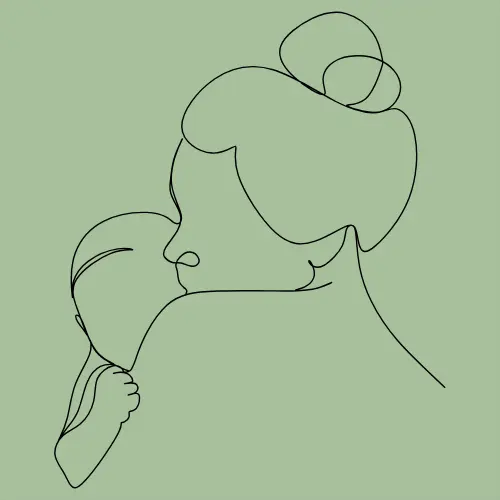

There is a word many women have never heard before becoming mothers, despite living through its profound reality every day: “matrescence”.
Coined by anthropologist Dana Raphael in the 1970s, matrescence describes the physical, emotional, psychological, social and spiritual transition of becoming a mother. Much like adolescence, it is a complete identity shift — a reorganisation of self, body, priorities, relationships and worldview. Yet unlike adolescence, it is rarely acknowledged, supported or understood within modern society.
Instead, mothers are often expected to emerge from birth instinctively equipped to nurture others while continuing to function as productive workers, emotionally available partners, organised household managers and socially agreeable women. We celebrate babies, but frequently overlook the immense transformation of the mother herself.
This silence has consequences. And today, this term is still not included in dictionaries.
Many mothers move through matrescence believing they are failing, feeling at sea, when in truth they are undergoing one of the most neurologically and spiritually significant transitions of human life.
Beyond the sleepless nights and practical adjustments, motherhood often initiates women into a deeper awareness of life itself. Many mothers experience heightened sensitivity, stronger intuition, a re-evaluation of priorities, grief for former identities, a longing for slower living, and a renewed connection to nature, ritual and meaning. Some describe feeling both more broken open and more whole than ever before.
Motherhood can awaken wildness, tenderness and unconditional love simultaneously.
It can also expose inherited wounds.
The transition into motherhood often brings unresolved experiences from our own childhoods to the surface. Many women begin reflecting on the ways they were parented, the emotional patterns they inherited, and the beliefs they carry about worthiness, productivity, sacrifice and care. In this way, matrescence becomes not only a transition, but an invitation into healing.
Within my own work supporting mothers, I often see women reconnecting with different archetypal aspects of themselves through deep self-inquiry: the Maiden, the Mother, the Inner Child, the Inner Parent. These inner landscapes can help women better understand their emotional responses, unmet needs and evolving identities.
For some, motherhood softens them. For others, it strengthens boundaries. Often it does both.
And while matrescence can be deeply beautiful, it also unfolds within systems that frequently fail mothers.
The emotional labour mothers carry remains largely invisible. The “mental load” of family life — the remembering, anticipating, organising and emotional management of the household — disproportionately falls upon women. Many mothers experience career disruption, financial disadvantage and the well-documented “motherhood penalty” that affects earnings, opportunity and societal value.
At the same time, many mothers are parenting in relative isolation, separated from the village structures humans once relied upon. We have normalised mothers carrying enormous responsibility with very little collective support.
This is why matrescence awareness matters not only for mothers, but for the wider community.
When we understand matrescence, we stop asking mothers, “What’s wrong?” and begin asking, “What support does this transition require?”
We begin creating cultures that value rest, community care, emotional wellbeing and continuity of support beyond birth and postpartum itself.
We begin recognising that motherhood changes women not just physically, but spiritually.
For many mothers, reflective practices become lifelines during this transition. Journalling in particular has been shown to support emotional processing, nervous system regulation, stress reduction and self-awareness. Writing and mapping creates space for mothers to hear themselves again beneath the noise of caregiving and expectation.
Through various journalling techniques, women can track emotional patterns, reconnect with forgotten desires, process birth experiences, explore identity shifts and develop greater compassion toward themselves.
Mothers also find healing through ritual — small intentional acts that bring meaning and presence into daily life. This may look like menstrual cycle tracking, creative expression and writing practices, seasonal activities, gratitude or mindfulness exercises, or intentionally honouring transitions within motherhood like a Maiden to Mother ritual I offer in my book.
These practices are not frivolous; they are restorative. They remind mothers that they, too, are worthy of tending. It’s foundational.
My own motherhood journey eventually led me to create “My Sacred Initiation Into Motherhood Matrescence Journal”, a guided companion designed to support women through this often unseen transition. What began as personal inquiry became a body of work grounded in reflection, archetypes, emotional wellbeing and the sacred complexity of becoming a mother.
The Journal invites mothers to explore themes such as identity, self-care, purpose, belief systems, connection, ritual and presence through a deep-dive guided process. More than anything, it seeks to offer mothers something many are quietly longing for: sacred space to turn inward and honour their own transformation. Their becoming.
Because motherhood is not simply the raising of children.
It is also the continual birth of the mother herself.
And perhaps one of the greatest acts of healing our society could offer is to finally recognise matrescence for what it truly is: not hormones, not depression, not lack of knowledge but a sacred human passage worthy of support, reverence and integrated, holistic care.
Featured on page 28 – Edition #174 of Connect – the holistic magazine of FNQ